

Ignition Coil
What Is Ignition Coil
An ignition coil is a vital component of a vehicle's ignition system. It is responsible for converting the low voltage from the battery into the high voltage needed to produce sparks at the spark plugs. The ignition coil acts as a transformer, This converts the vehicle's low-voltage power supply to the high voltage needed to cross the spark plug gap, igniting the compressed air-fuel mixture in the combustion chamber. utilizing electromagnetic induction to generate the high voltage required for efficient combustion in the engine.
Advantages of Ignition Coil
Higher Energy Output
Ignition coil provides better energy output as compared to traditional ignition systems. This ensures that the spark generated is more reliable and powerful, which in turn supports better engine performance.
Increased Fuel Efficiency
With better ignition, the fuel combustion process becomes more efficient. This means that the engine is able to produce power with lesser fuel consumption, thus enhancing fuel efficiency.
Better Cold Start
Ignition coils provide better spark during the cold start, which is crucial for engines during winters. This ensures that the vehicle runs smoothly even during colder temperatures.
Flexibility
Modern ignition coils can adapt to changing engine conditions and can provide different ignition patterns depending on the engine's requirements.
Environmental Friendly
With better fuel combustion and energy efficiency, Ignition coils help to reduce the harmful emissions that are released into the environment.
Better Engine Performance
Ignition coils help to provide consistent and reliable spark, which results in better engine performance. The vehicle can achieve better horsepower and torque outputs, thereby enhancing overall performance.




Why Choose Us
Professional team
Professional sales team and engineer team provide professional technical Support,Test video and Sample support
Rich Experience
Our company has many years of production work experience. The concept of customer-oriented and win-win cooperation makes the company more mature and stronger.
High Quality
Our products are manufactured or executed to very high standards, using the finest materials and manufacturing processes.
Advanced Equipment
Equipment based on the latest technological developments has higher efficiency, better performance and stronger reliability.
One-stop Solution
From the begining inquiry and throughout the entire process until you receive the goods. we are dedicated to supporting you every step of the way.
Competitive Price
We have professional sourcing team and cost accounting team, stive to reduce cost and profit and provide you a good price.
Types of Ignition Coils

Conventional Ignition Coils
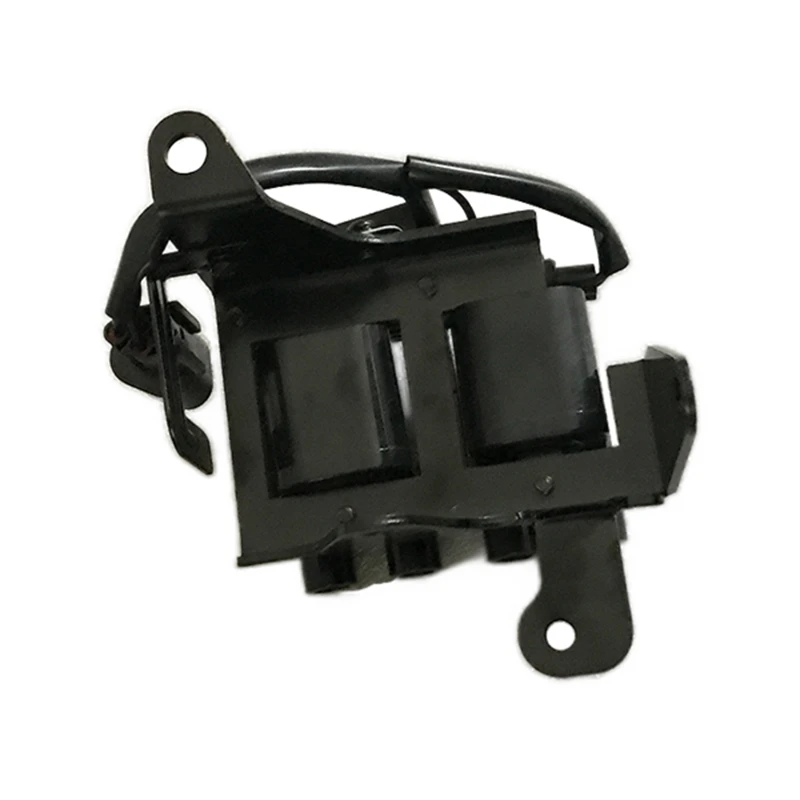
Conventional ignition coils, also known as canister-style coils, have been widely used in older vehicles. They are typically mounted outside the engine and consist of a metal canister housing the primary and secondary windings. These coils are connected to the distributor, which distributes the high voltage to the spark plugs. Conventional ignition coils are relatively simple in design and are known for their durability and reliability.

Distributorless Ignition System (DIS) Coils
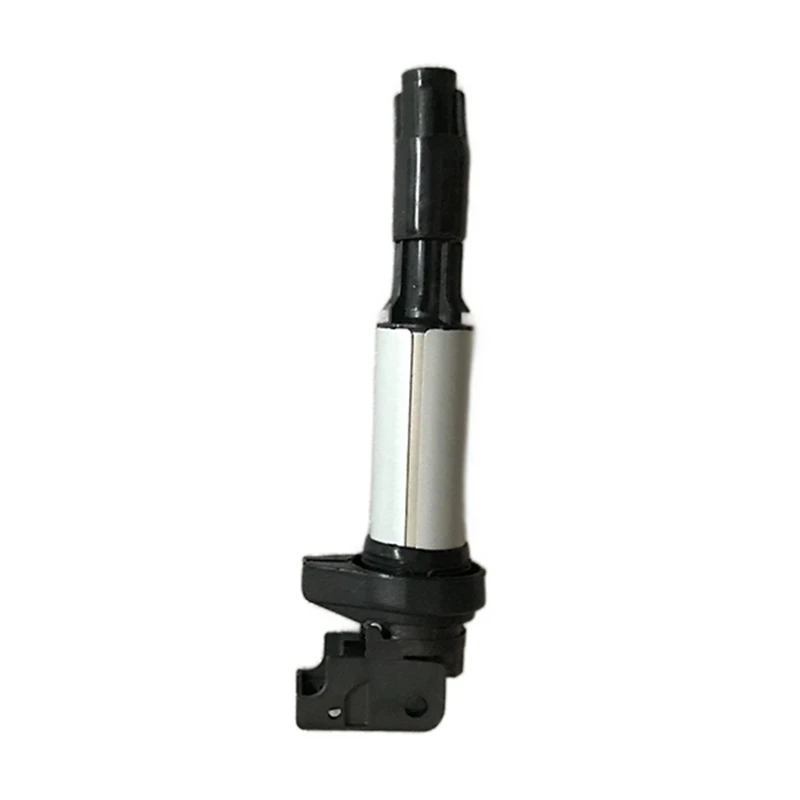
With the advancement in ignition technology, distributorless ignition systems (DIS) have become more prevalent. DIS coils are typically mounted directly on the spark plugs or close to the spark plugs, eliminating the need for a distributor. Each coil is responsible for supplying high voltage to a specific spark plug. The DIS system uses sensors to determine the precise timing of spark production for each cylinder. DIS coils offer improved ignition performance and efficiency compared to conventional coils.
Coil-on-Plug (COP) Ignition Coils
Coil-on-plug (COP) ignition coils take the concept of DIS coils a step further. In COP systems, each cylinder has its own ignition coil mounted directly on the spark plug. This configuration eliminates the need for spark plug wires and provides even more precise and efficient ignition. COP ignition coils offer enhanced spark energy and better combustion control, resulting in improved engine performance and reduced emissions.
Functioning of an Ignition Coil
How To Test The Ignition Coil Pack
One of the popular ways to critically determine how well an ignition coil pack is functioning is to test it, of course. While professionals usually perform this, it can also be done by individuals at homes with proper experience and knowledge. This section will briefly review two test types that can help you determine whether something's wrong with your ignition coil.
Quick Performance Test
Step 1
Locate the ignition coil. In most modern cars, there's an ignition pack for each cylinder. They're usually located above the engine and can be easily accessed. In most cases, they're covered, so you'll have to remove the front cover to access the ignition coil pack from a cylinder.
Step 2
Power balance test. The first thing you should do is to test the power balance. You can do this by turning on the engine and disconnecting an individual ignition coil. If you hear a decrease in RPMs, this means that the ignition coil on that cylinder is working correctly and in full capacity. However, if you disconnect an ignition coil and don't hear any difference, the coil is malfunctioning. You may also see the come on. Continue to test all other coils the same way.
A More Detailed Test
Step 1
Make sure your vehicle is turned off and access the ignition coil pack. Once you open the front hood, locate the ignition coil pack, and depending on your vehicle's make and model – remove the front lid covering the packs.
Step 2
Remove an ignition pack. Once you can access the ignition pack, remove the side crews, which will immediately let you remove the whole pack.
Step 3
Run a resistance or ohms reading test (with a multimeter). Locate the harness connector on the ignition coil pack you've just removed. These connectors usually have three terminals. For this test, you'll need terminals 1 and 2. The best practice to locate the correct terminals for your specific car is to either do a Google image search or consult your technician. Finally, when you touch the terminals, the multimeter should show numbers above 0. Otherwise, it would mean that the ignition coil pack is in bad shape. Do the same with all other ignition coil packs.
What Are The Symptoms Of a Failing Ignition Coil
A failed ignition coil can severely damage your engine, so keep an eye out for these five ignition coil failure symptoms.
An Illuminated Check Engine Light
Fortunately, if your vehicle has a computer running things instead of a distributor, chances are that it’ll notice when an ignition coil has gone bad. When it does, it’ll illuminate your check engine light so that a professional technician can use an OBD-II scanner to identify the problem.
01
Difficulty Starting Your Engine
Since ignition coils are responsible for delivering electricity to your spark plugs, you may notice that starting your engine is difficult with a failed ignition coil. In fact, if you have a single ignition coil, your vehicle may not start at all due to no spark being delivered to the spark plugs. With COP setups, however, you may have to feel for symptoms of a “dead” cylinder, like jerky or sputtery starts.
02
Misfiring
That feeling of having a “dead” cylinder is called misfiring, and may also occur while driving. If your engine is misfiring, it may run poorly, shake, and vibrate when idling - and jerk or sputter while driving. A bad misfire will also cause your check engine light to flash, indicating a severe issue that needs to be addressed immediately. Misfiring puts incredible strain on engine components, so we recommend getting your vehicle looked at ASAP if you notice any of these symptoms.
03
Less Power And Reduced Fuel Efficiency
When spark plugs don’t receive enough electricity from the ignition coil, they may fail to spark or do so intermittently - resulting in reduced power output. When this happens, your engine makes up for the lack of power by consuming more fuel, which reduces gas mileage and can foul spark plugs. So watch out for stalling, slow acceleration, and rough idling, since they’re all symptoms of a bad ignition coil.
04
Backfiring
If your engine attempts to burn more fuel to compensate for the bad ignition coil, it may also backfire. Backfiring happens when unburnt fuel travels through the exhaust system and detonates. If your engine is backfiring, you may notice loud popping sounds coming from the rear of your vehicle.
05
The ignition coil consists of two primary components the primary winding and the secondary winding. The primary winding is made of thick wire with relatively few turns. In contrast, the secondary winding is composed of much finer wire with a significantly higher number of turns. The primary winding is connected to the vehicle's electrical system, while the secondary winding generates the high-voltage output.
The core material of the ignition coil plays a crucial role in its construction. It is typically made of a ferromagnetic material such as iron or steel, which helps to intensify the magnetic field generated by the primary winding. The core is often shaped like a hollow cylinder or a stack of laminations to minimize energy losses through magnetic saturation and eddy currents.
The ignition coil features a high-voltage output terminal where the high voltage generated in the secondary winding is delivered. This terminal is typically connected to the distributor (in older systems) or the spark plugs (in newer systems) through high-tension wires. It is designed to withstand the coil's high voltages without electrical leakage.
How Does An Ignition Coil Work
The main task of the ignition coil is to transform the on-board voltage of 12V available in the vehicle to the required ignition voltage and then passed on to the spark plug.
Basically, the function of the ignition coil is relatively simple to explain. The ignition coil itself contains a primary and a secondary winding. The primary winding has very few turns, while the secondary winding has very many.
As soon as the engine control unit sends a signal to the ignition coil, the on-board voltage of 12V flows through the primary winding. Through this process, a magnetic field is built up. As soon as the signal from the engine control unit is interrupted again, this magnetic field is abruptly reduced. This abrupt degradation generates a high voltage in the secondary winding. This high voltage is now transmitted to the spark plug, which consequently generates a spark.
Why Do Ignition Coils Fail
Although ignition coils are designed to last, the increasing demands placed on them means that they can fail. The main causes being.

Damaged Spark Plugs Or Plug Wires
A bad spark plug or spark plug wire with excessive resistance causes the coil’s output voltage to rise - if this exceeds 35,000 volts it can damage the coil’s internal insulation, causing a short. This can result in reduced output, causing ignition misfires under load and/or poor starting.

Worn Or Excessive Spark Plug Gap
As spark plugs wear so will the gap between its two electrodes, meaning that the coil now has to generate a higher voltage in order to bridge it. The added strain on the coil can result in voltage overload, and in turn, overheating.
Vibration Damage
Constant wear and tear from engine vibration can damage the ignition coil windings and insulation, resulting in shorts or breaks in the secondary windings. Similarly, it can loosen the electrical connection at the spark plug, forcing the coil to work overtime to fire the spark plug.
Overheating
Because of their location, ignition coils are often exposed to excessive engine temperatures. This can reduce the coils ability to conduct electricity, impacting both its performance and longevity.

Varying Resistance
A short or low resistance in the coil’s winding will increase the electricity flow through the coil, causing damage to the entire ignition system. Changes in resistance may also cause a weak spark, which will result in the vehicle not starting and damage to both the ignition coil and surrounding parts.
Excessive Moisture
The most likely source is an oil leak from a failed valve cover gasket, causing oil to build up around and damage both the ignition coil and spark plug. Water, from A/C condensation, for example, can also penetrate the system. In both cases, it’s important to address the root cause to avoid repeat failures.
Modern vehicles often come with individual ignition coil packs for each cylinder (known as coil-on-plug or direct ignition system) or with coil packs for pairs of cylinders (waste spark ignition system). The former is more common in newer vehicles as it allows for more precise timing and better control over the ignition process.
The main differences between ignition coil packs and a single ignition coil are the number of cylinders they serve, their design, and their application. Single ignition coil packs are more often found in older vehicles. In contrast, ignition coil packs offer better control, improved performance, and easier overall maintenance. This makes ignition coil packs the preferred choice in modern engines, especially those with multiple cylinders.

What Gives Power To The Ignition Coil

The ignition coil has two internal coils, the primary and the secondary, the primary coil is connected to battery positive power via the ignition switch, battery negative to the primary coil is switched on and off by the ignition module, ECU or on older vehicles by a set of contact points.
When both the positive and negative of the battery are connected to the primary coil a magnetic field is created, when the negative to the primary is then switched off the magnetic field collapses, this collapsing magnetic field then induces a high voltage in the secondary coil, this high voltage is then send to the plug where it tries to jump the gap in the spark plug and a spark results.
How to Replace Your Ignition Coils
Replacing your vehicle’s ignition coils is relatively easy, depending on the vehicle you are working on. While seeking help from a professional mechanic is always recommended, replacing a bad ignition coil or coil pack is something many can do with simple hand tools. Here, we’ll walk through the simple steps of replacing an ignition coil to help you get your car repaired quickly and easily:
1. Locate Your Vehicle’s Ignition Coils
The first step is to locate the vehicle ignition coils. You can review your owner’s manual for a breakdown of your underhood components or simply search online for an under-hood schematic. Coil-on plugs are usually located at the top of each cylinder, while a single ignition coil in a distributor setup will be on the right-hand side of the engine bay.
2. Prep Car/Tools
You will want to prep the vehicle and gather the tools needed to replace your ignition coil. In order to get the vehicle ready, you will want to ensure the car is on level ground, the emergency brake is on, and the negative battery cable is disconnected. When working with anything electrical on your vehicle, disconnecting the car battery will ensure there are no volts running through your system. The tools you will need will depend on the vehicle, but most will require a simple socket set.
3. Test Each Coil With a Multimeter/Code Reader
If you are unsure of which ignition coil is giving you issues, you can test them with a multimeter to replace just the one that is failing. Since most people do not have a multimeter, you can use an inexpensive code reader to diagnose your issue. Simply plug in your code reader, and it should tell you which cylinder, sometimes referred to as “bank”, you are having a misfire on.
4. Remove Each Coil From the Vehicle
Whether you are replacing one or all of your ignition coils, you will need to know how to remove them from your vehicle. Most coil-on plug systems will be held down by a single hex-head bolt that can easily be removed with a basic socket set. Simply loosen and remove the hold down bolt and pull the coil out of the spark plug hole.
5. Lubricate and Install New Coils
When reinstalling your ignition coils, you will want to lubricate them and add a little dielectric grease to repel moisture and protect your electrical components from corrosion. Once the ignition coils have been installed and properly seated, you can go ahead and tighten them down to the correct torque specification.
6. Check Over Work and Reconnect Battery
Once you have installed your ignition coils, check over your work and reconnect the battery. Ensure the connectors are securely fastened. Start your car and take it for a test drive to confirm that the issue has been resolved. If you still have a check engine light, clear it with your code reader or take it to your local auto shop to have it cleared.
What’s The Difference
The ignition coil and the spark plug are both important components of an internal combustion engine, but they serve different purposes.
The ignition coil, also known as a transformer, is responsible for increasing the voltage of the electrical current to produce a spark that can ignite the fuel mixture in the engine's cylinders. The ignition coil works by stepping up the voltage of the current from the battery or alternator to a much higher level, which is necessary to jump the gap between the spark plug electrodes.
On the other hand, the spark plug is the device that delivers the spark produced by the ignition coil to the engine's cylinders. The spark plug consists of a metal shell with a central electrode and a ground electrode, which are separated by a gap. When the current from the ignition coil reaches the spark plug, it jumps the gap between the electrodes, producing a spark that ignites the fuel mixture in the cylinder.
Our Factory
Kingko Industrial Co., Ltd was established in 2015, located in Suzhou, China(nearby Shanghai). Our company specialized in full range of spare parts exporting. Our Team have been in this filed more than 8 years. After years of development, the company has created a wealth of experience in sales and after-sales service team,and win a very high reputation in our customers. We have our own factory and warehouse, factory visit is weclomed.
FAQ
Q: What does an ignition coil do?
Q: How does an ignition coil work?
Q: What are the components of an ignition coil?
Q: What is the difference between a single-coil and a dual-coil system?
Q: How do I know if my ignition coil is failing?
Q: How many different types of ignition coils are there?
Distributor Coils, Block Coils, Block Coils with two high voltage outputs, Pencil Coils with double spark and single spark technology and Coil Systems (also known as ‘rails’).
Q: How often should I replace my ignition coils?
Q: What causes ignition coils to fail?
Q: Can I drive my car with a faulty ignition coil?
Q: What is an ignition coil?
Q: What is a coil pack?
Q: How do I know if my coil pack is failing?
Q: Can I test my coil pack at home?
Q: How do I clean my ignition coils?
Q: Can I replace an individual coil in a coil pack?
Q: What is a waste spark ignition system?
Q: What is a distributorless ignition system?
Q: Can I drive my car without ignition coils?
Q: Should ignition coils be replaced with spark plugs?
Q: Why would ignition coil need to be replaced?
As one of the leading ignition coil suppliers in China, we warmly welcome you to wholesale cheap ignition coil in stock here from our factory. All customized products are with high quality and low price. For free sample, contact us now.
89458-71010, E5T05471, Electric Water Pump 11517586925